
What Are You Looking For?
This guide breaks down the key differences and how to select the right product for your application.
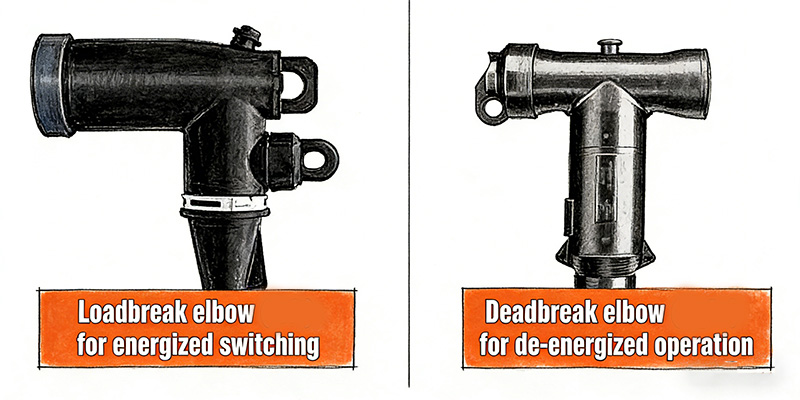
Loadbreak connectors are designed to be operated while the system is energized — they can make or break load currents under normal conditions. Deadbreak connectors, by contrast, are intended for operation only when the system is de-energized.
If your application requires frequent switching operations without power shutdown, Loadbreak is the correct choice. If your system prioritizes maximum current capacity and long-term reliability with minimal switching, Deadbreak is more appropriate.
Eaton Cooper elbow connectors are available across three voltage classes:
Always select based on your system’s maximum phase-to-phase voltage, not just the nominal voltage.
200A elbows are commonly used for lateral and tap connections. 600A and 900A deadbreak connectors handle feeder-level currents and are standard in primary distribution networks.
Selecting the right elbow connector requires understanding your system’s switching requirements, voltage class, and current load. When in doubt, work with a certified distributor like Jiuyingtech who can provide IEEE/ANSI compliant products backed by full technical documentation.