
What Are You Looking For?
Transformer protection is not a one-size-fits-all equation. Two of the most common protection devices — Current Limiting Fuses (CLF) and Bay-O-Net Fuses — serve different but often complementary roles in medium-voltage distribution systems.
Understanding when to use each — or both in series — is critical for designing a protection scheme that is both reliable and cost-effective.
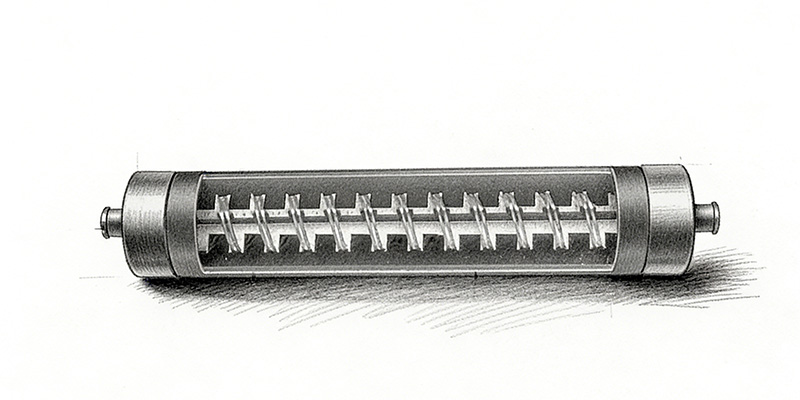
The Bay-O-Net fuse, introduced by Eaton Cooper in the 1960s, is a replaceable fuse element housed in a holder designed for pad-mounted transformers. It provides fault current protection and is available in Current Sensing, Dual Sensing, Dual Element, and High Amp Overload configurations.
It is typically installed on the load side of the transformer and is accessible via a hotstick operation — allowing replacement without opening the transformer tank.
The ELSP (Eaton Limiting Service Protector) Current Limiting Fuse is designed for transformer oil and FR3 Fluid environments. It is series-connected with a Bay-O-Net fuse or weak link fuse to provide high interrupting capacity fault protection.
Unlike a standard fuse that may take cycles to clear a fault, a Current Limiting Fuse operates in less than half a cycle, dramatically reducing let-through energy.
The most robust protection scheme places a Current Limiting Fuse upstream of the Bay-O-Net fuse. The CLF handles high-magnitude fault currents that exceed the Bay-O-Net interrupting rating, while the Bay-O-Net handles lower-level overload and fault conditions.
This series combination is standard practice in North American pad-mounted transformer protection and is fully compliant with IEEE/ANSI standards.
For most utility and industrial transformer applications, the CLF + Bay-O-Net series combination provides the best protection. For lighter-duty applications with lower fault currents, a standalone Bay-O-Net may be sufficient.