
What Are You Looking For?
When specifying components for a 35kV electrical grid, engineers often look at the headline numbers: 600 Amps, 35 kilo-Volts. However, the true reliability of a power system is hidden in the "Production Test" section of the technical data sheet.
Today, we are breaking down the three critical performance benchmarks of the Eaton Cooper Power series 600A/900A 35kV Deadbreak Bushing to see what they mean for real-world operations.
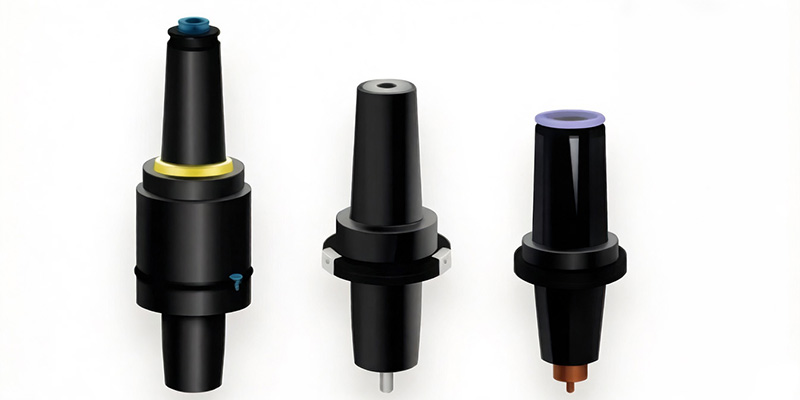
Every bushing in this series must pass a 50kV AC 60Hz 1-minute withstand test.
The Reality: In a 35kV rated system, the normal phase-to-ground voltage is significantly lower than 50kV.
The Purpose: This test simulates extreme, short-term overvoltages—such as those caused by switching surges or system faults. By successfully holding 50kV for a full minute without flashover or puncture, the bushing proves it has a significant safety margin to protect your transformer during grid instability.
Perhaps the most important metric for long-term health is the Minimum Partial Discharge Level of 26kV.
What is PD?: Partial discharge refers to small electrical sparks that occur within air bubbles or defects in the epoxy insulation. Over time, these sparks act like "micro-drills," slowly eating away at the material until a total failure occurs.
The Benchmark: By ensuring no significant discharge occurs at levels up to 26kV, the manufacturer guarantees that the epoxy casting is "void-free." For the end-user, this translates to an expected service life of 30+ years with virtually zero maintenance.
A common question in substation design is: How can the same bushing body handle both 600A and 900A?
Standard 600A: Uses a standard aluminum threaded stud. This is the industry workhorse for most underground distribution tasks.
The 900A Upgrade: By swapping the aluminum stud for an all-copper threaded stud (part of the STUD635 series), the continuous current rating increases to 900A.
Why it works: Copper has higher electrical conductivity and lower thermal resistance than aluminum. This allows the assembly to carry 50% more current without exceeding the temperature rise limits defined by IEEE Std 386™. This flexibility is a massive advantage for utilities planning for "future-proof" infrastructure.
The bushing is rated for 150kV BIL (Basic Insulation Level). This is a pulse test that simulates a lightning strike. In a 35kV class system, the ability to withstand a 150kV surge is what prevents a summer thunderstorm from turning into a city-wide blackout.
Technical specs aren't just numbers on a page—they are a promise of performance. Whether it's the 50kV withstand protecting against surges or the 26kV PD limit ensuring decades of life, these metrics are why the Cooper Power series remains a gold standard for 35kV apparatus.