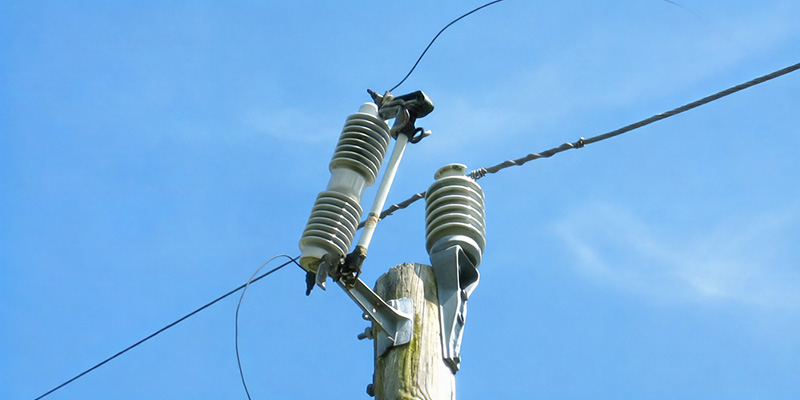
In high-voltage distribution networks, when dropout fuses interrupt fault currents, they generate extremely high-temperature arcs and rapidly expelled ionized gases. If you've observed standard fuses on the market, you'll notice many models expel flames in both upward and downward directions during operation.
However, Eaton Cooper's Type-L fuses insist on using a Unidirectional Downward Exhaust (Single Venting) design. This seemingly minor modification actually addresses one of the most critical safety hazards in power systems.
1. The Hidden Danger of Traditional Bidirectional Exhaust: Phase-to-Phase Flashover
Many conventional fuses use bidirectional exhaust to balance pressure. This creates a direct problem:
Upward-jetting arc gases: The intensely hot ionized gases are conductive. If expelled upward, they can easily contact the metal frame above or adjacent phase conductors.
Phase-to-phase short circuit (Flashover): What starts as a single branch fault can escalate into a severe phase-to-phase short circuit, potentially causing an entire line section to trip.
2. The "Unidirectional Downward" Philosophy of Eaton Type-L
Eaton's R&D engineers achieved directional control of arc gases by optimizing the bottom structure of the fuse tube.
Protecting equipment above: Since gases are expelled only downward, the insulator, busbar, and support structure above the fuse remain completely in a safe zone, free from arc erosion.
Preventing water ingress: The top of the unidirectional exhaust is typically sealed (or equipped with a special rain cap), preventing rainwater from seeping into the fuse tube. Moisture can cause fuse link degradation or reduced arc-quenching performance.
Higher interrupting capacity: The directional exhaust design allows for more scientific pressure buildup inside the arc-extinguishing tube, helping to rapidly extinguish the arc at current zero crossing. According to PDF documentation, the Type-L can reliably interrupt currents up to 10,000A (10kA) in 12kV systems.
3. Real-World Feedback from Industrial Sites
In densely populated urban centers or high-density distribution rooms, the safety clearance between equipment is often very limited.
Case study: After switching to Eaton Type-L fuses, one power utility recorded an 85% reduction in secondary accidents caused by arc flash.
Operational safety: For utility workers standing below, while downward exhaust might sound dangerous, the Type-L's reasonable tilt angle ensures gases are expelled diagonally downward, avoiding the operator's vertical position.
4. Summary: Safety Lies in Those Few Centimeters of Deflection
Unidirectional downward exhaust is more than just a physical structure—it represents Eaton's pursuit of excellence in "arc control technology." For grid operation teams pursuing high reliability, this design serves as an "invisible barrier" against large-scale power outage incidents.