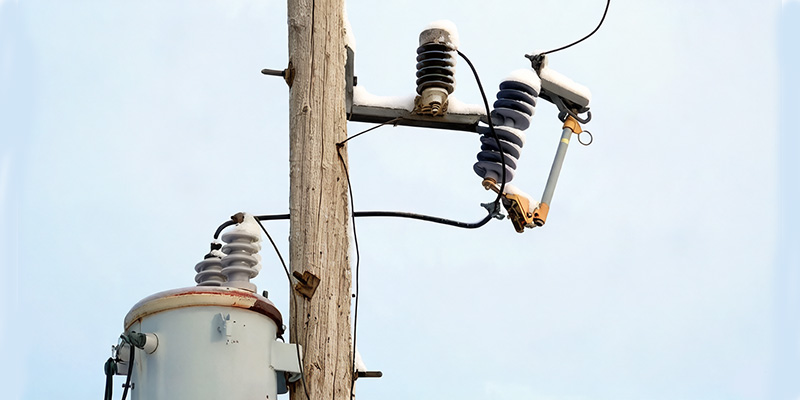
In distribution systems, dropout fuses serve as the "safety valve" for transformer protection. However, many operation and maintenance personnel often face a dilemma: if the fuse link specification is too large, it fails to provide protection; if too small, it frequently blows during transformer startup. Today, we will combine Eaton Cooper's official technical manual to provide an in-depth analysis on how to scientifically match the "strongest shield" for transformers.
1. Core Logic of Selection: Balancing Protection and Stability
According to Eaton Type-L fuse standard specifications, two critical factors must be considered during selection:
Withstand Inrush Current: During transformer energization, a significant inrush current occurs (typically 8-12 times the rated current). The fuse must withstand this transient impact without nuisance tripping.
Reliable Fault Interruption: When a short circuit occurs inside the transformer or on the low-voltage side, the fuse must blow rapidly before equipment damage occurs.
2. 10kV Transformer Fuse Selection Principles
Referencing guidance from page 8 of Eaton's technical catalog, we can summarize the following "golden rules":
Transformers 160kVA and below: Rated current selection should be 2 to 3 times the transformer's high-voltage side rated current. This is because smaller capacity transformers are more sensitive to inrush currents, and a higher multiplier reduces unnecessary outages.
Transformers above 160kVA: Rated current selection should be 1.5 to 2 times the transformer's high-voltage side rated current. Larger capacity transformers operate more stably, and a smaller multiplier provides finer protection.
3. Practical Reference Table (10kV System Example)
For easy reference, we've compiled the following table using the formula I=S/(√3xU):
|
Transformer Capacity (kVA)
|
High-Voltage Side Rated Current (A)
|
Recommended Fuse Rating (A) - Eaton Standard
|
|
30
|
1.73
|
3 ~ 5
|
|
50
|
2.89
|
5 ~ 7
|
|
80
|
4.62
|
10
|
|
100
|
5.77
|
15
|
|
200
|
11.55
|
20 ~ 25
|
|
400
|
23.09
|
40
|
|
630
|
36.37
|
65
|
Professional Tip: For systems using Type-L fuses, it's recommended to prioritize Eaton Cooper's original Edison™ series fuse links. Their high-purity materials ensure stable current-carrying capacity in harsh environments.
4. Three Common Selection Mistakes
"Upsizing Instead of Downsizing": Blindly increasing fuse current rating. This can cause the fuse to fail to operate during severe transformer overloads, ultimately burning out transformers worth tens of thousands of dollars.
Ignoring Ambient Temperature: If fuses are installed in poorly ventilated or high-temperature environments, derating should be considered (i.e., selecting one level higher than standard).
Brand Mixing: Although Type-L fuse tubes are interchangeable, different brands have varying time-current characteristic (TCC) curves. For precise protection, maintaining brand consistency is recommended.
5. Summary
Correct selection is the prerequisite for safe grid operation. Using the reference table in this article, you can quickly complete preliminary selection.